Minimally Invasive Spine Surgery
Minimally Invasive Spine Surgery services offered in Appleton, Oshkosh, North Fond du Lac, Bellevue and Green Bay, WI
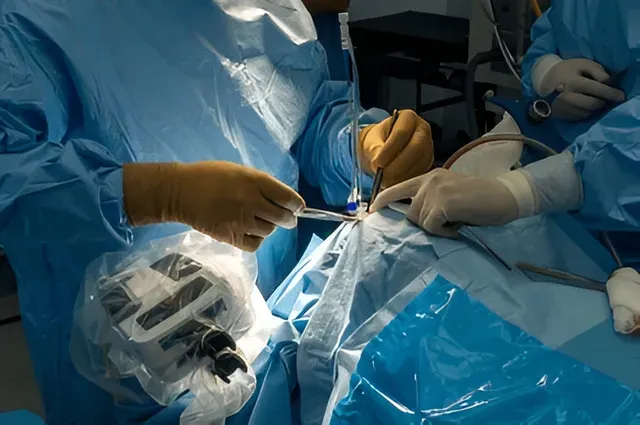
Minimally invasive spine surgery (MISS) uses advanced techniques to treat spinal conditions through smaller incisions with less disruption to surrounding tissues. This approach can reduce pain, blood loss, and recovery time while achieving the same surgical goals as traditional methods. From microdiscectomy to next-generation endoscopic surgery, MISS offers patients faster recovery and lasting results.
Minimally Invasive Neurosurgery Q & A
What is minimally invasive spine surgery?
Minimally invasive spine surgery (MISS) uses specialized tools and techniques to treat spinal disorders through smaller incisions than conventional “open” surgery. By limiting disruption to muscles, ligaments, and surrounding tissues, MISS achieves the goals of surgery while reducing pain, blood loss, and recovery time.
What are the benefits of minimally invasive surgery?
Compared to traditional open surgery, MISS offers:
Faster recovery and shorter hospital stays
Less blood loss
Decreased postoperative pain
Less damage to back and neck muscles
Smaller scars and improved cosmetic results
For many patients, this means a quicker return to normal activities with fewer complications.
Which conditions can minimally invasive surgery treat?
MISS can be used to address a wide range of spine conditions, including:
Herniated or bulging discs
Spinal stenosis (narrowing of the spinal canal)
Spinal instability, such as spondylolisthesis
Spinal deformities, including scoliosis
Spinal fractures or trauma
Tumors or infections of the spine
Complex or revision surgeries where traditional open surgery might otherwise be required
What types of minimally invasive procedures are available?
Minimally invasive techniques may include:
Microdiscectomy – removing disc fragments that compress nerves
Micro-laminectomy – relieving pressure by removing small portions of bone and ligament
Minimally invasive spinal fusion – stabilizing the spine with screws and rods through smaller incisions
Endoscopic spine surgery – a next-generation approach using an ultra-small scope for even less tissue disruption
Hybrid procedures – combining minimally invasive and open approaches when appropriate for complex cases
Advanced tools such as tubular retractors, microscopic visualization, and computer-assisted navigation improve precision while minimizing trauma to healthy tissue.
Am I a candidate for minimally invasive spine surgery?
Candidacy depends on your diagnosis, the severity of your condition, and your overall health. MISS is particularly effective for patients with herniated discs, spinal stenosis, or instability who have not improved with conservative treatments. Complex deformities, fractures, or tumors may also be managed with minimally invasive techniques in select cases.
A full evaluation—including medical history, physical exam, and imaging studies—helps determine if this approach is right for you.
What is the goal of treatment?
The goal of minimally invasive surgery is to relieve pressure on spinal nerves, restore alignment and stability, and improve function—while minimizing disruption to surrounding tissues. This approach allows patients to recover more quickly and return to their active lifestyles with long-term results.